Transcript
0:00What is ADME?
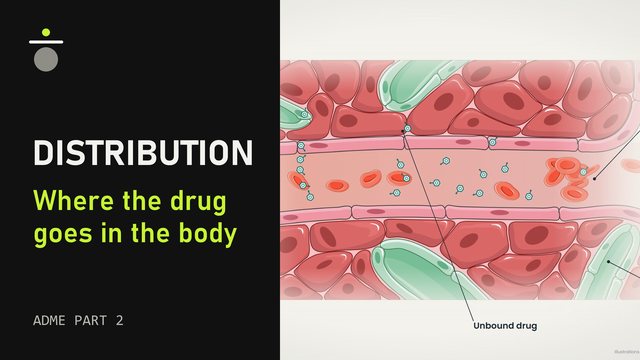
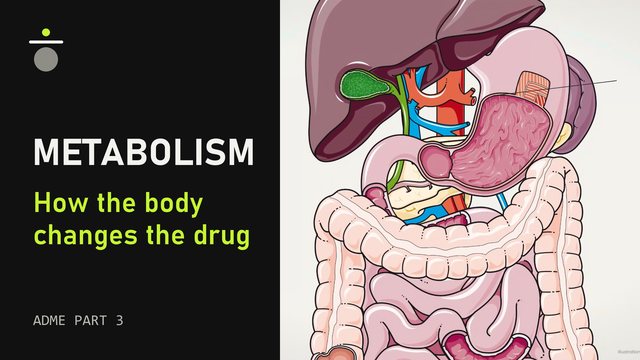
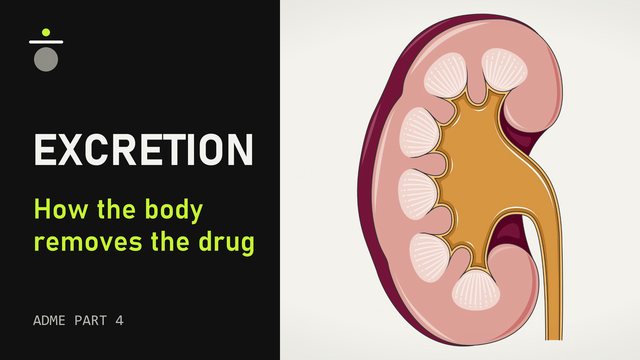
Part one of our introduction to ADME. Pharmacokinetics describes what the body does to a drug. Four processes determine what happens to an oral dose: absorption, distribution, metabolism and excretion. Together, these four processes are called ADME. Absorption is the movement of the drug from the site of administration into the blood. Distribution is the movement of the drug from the blood into the tissues. Metabolism is the chemical change of the drug by enzymes, mainly in the liver. Excretion is the removal of the drug and its metabolites from the body, mainly in urine and in bile. ADME determines how much of the drug reaches its site of action, and for how long.
1:00Disintegration and dissolution
Part one follows absorption: how a swallowed tablet moves from the gut into the blood. After it is swallowed, the tablet passes down the esophagus into the stomach. A tablet contains crystals of the drug, mixed with fillers and binders. In the stomach, gastric fluid enters the tablet. The tablet swells and breaks into smaller particles; this step is called disintegration. The drug then dissolves: molecules leave the surface of each crystal and enter the fluid. Only dissolved drug can cross the gut wall.
1:43The small intestine
The stomach empties its contents into the small intestine, where most absorption takes place. The small intestine is about two thirds of the five-meter length of the gut, and its contents take about three hours to pass through it. Its inner lining forms circular folds, and the folds carry small projections called villi. The cells on each villus, the enterocytes, carry microvilli on their surface. Together, the villi and microvilli increase the surface area 60 to 120 times. With the folds, the inner surface of the small intestine measures about 30 square meters in an adult.
2:33Crossing the gut wall
To reach the blood, a drug must cross this layer of enterocytes. Drugs that dissolve well in fat are called lipophilic. Most drugs cross by passive diffusion: they dissolve in the cell membrane and move down their concentration gradient, from the gut lumen into the cell and on into the blood. Small water-soluble molecules can also pass between the cells. Tight junctions seal most of the space between the cells, so this paracellular route carries only a small fraction of most doses.
3:08Transporters
Uptake transporters carry some drugs into the cell. PEPT1 normally absorbs small peptides from food, and it also carries the antiviral drug valacyclovir. Efflux transporters, such as P-glycoprotein, pump drug from the cell back into the gut lumen, using energy from ATP. Digoxin is a substrate of P-glycoprotein.
3:35Into the blood
Drug that leaves the enterocytes enters the capillaries of the villi, and the portal vein carries it to the liver. Drug that is not absorbed moves on to the colon and leaves in the feces. The fraction of the dose that crosses from the gut lumen into the gut wall is called the fraction absorbed, Fa.
Sources
- Helander HF, Fändriks L. Surface area of the digestive tract, revisited. Scand J Gastroenterol. 2014. PMID 24694282
- Davis SS, Hardy JG, Fara JW. Transit of pharmaceutical dosage forms through the small intestine. Gut. 1986. PMID 3732895
Illustrations adapted from Servier Medical Art (smart.servier.com), CC BY 4.0.