 7.17:58
In vitro ADME assays
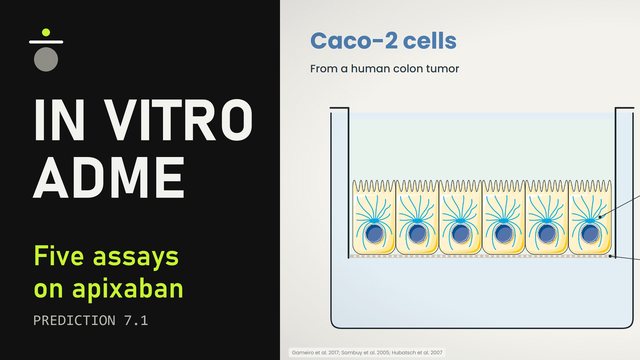
This lesson covers five assays: metabolic stability, permeability, plasma protein binding, CYP inhibition and the transporter assay. Apixaban shows the results of all five, and clinical studies then tested these results.
 7.27:30
From test tube to human
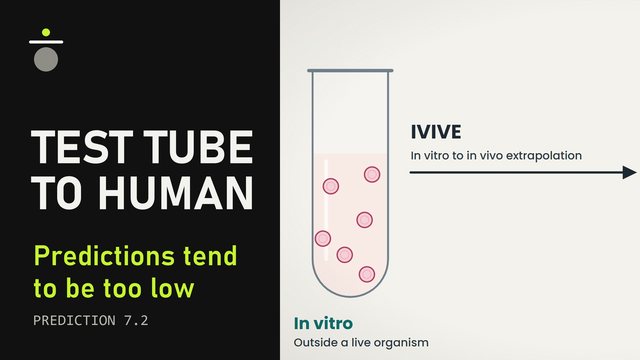
This lesson covers IVIVE, in vitro to in vivo extrapolation, with its scaling, binding corrections and the well-stirred model. A published analysis of 101 drugs in hepatocytes and 83 in microsomes shows the size of the error, and promethazine is a worked example.
 7.37:53
From animals to humans
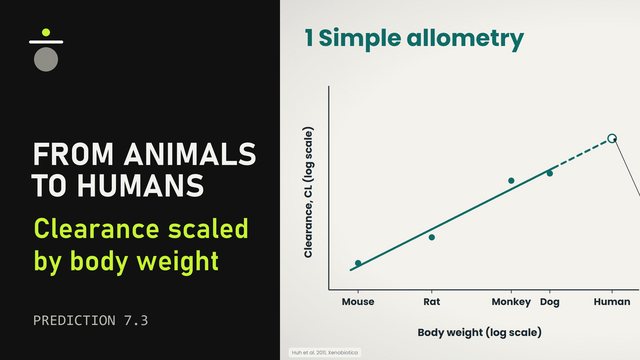
This lesson shows how allometric scaling predicts human clearance from animal clearance, and where it fails. For linezolid, a prediction made after human values were published lay inside the reported range. For UCN-01, an extreme case, simple allometry predicted a clearance about 5,000 times too high, possibly in part because of strong binding to a human plasma protein.
 7.47:38
PBPK models
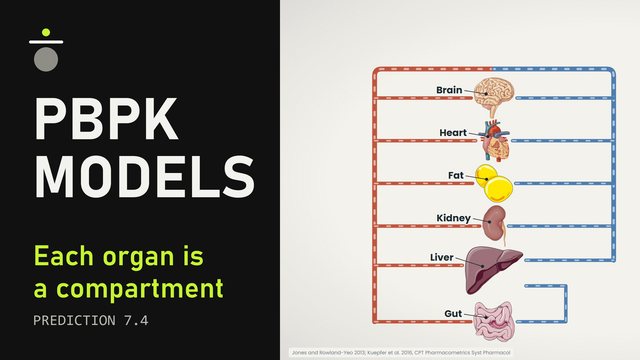
This lesson explains the physiologically based pharmacokinetic (PBPK) model, with its organ compartments, system parameters and drug parameters such as Kp. The example of ibrutinib shows a PBPK model that predicted the 10-fold effect of rifampicin before the study and then supported dose advice.
 7.57:36
Machine learning for ADME
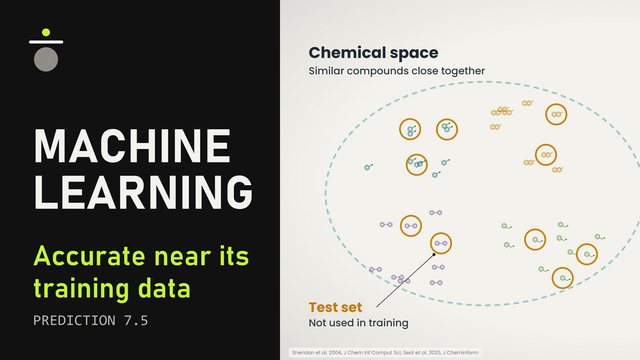
This lesson covers training data, random, time and scaffold splits, the applicability domain and three situations in which models fail. A study of rat liver microsomal stability shows how a model performs on compounds measured later.
 7.67:33
From molecule to dose
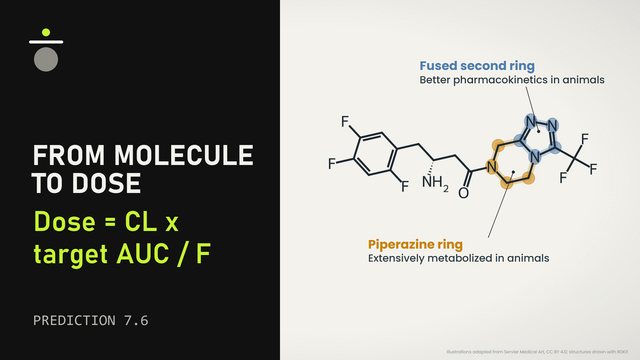
This lesson covers the dose equation and four steps, from ADME predictions to a ranked shortlist. Sitagliptin, a drug for type 2 diabetes, shows selection by risk and metabolism, and its measured human values give an example of the dose equation.