 2.17:34
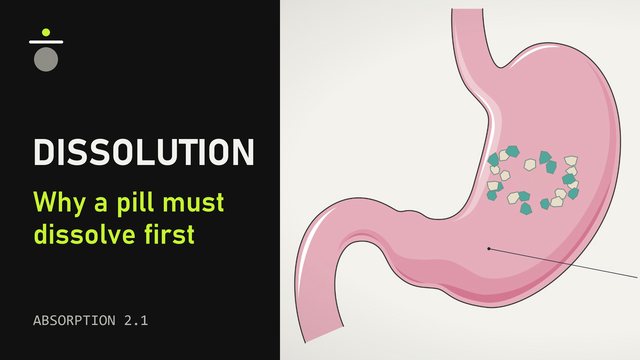
Dissolution and solubility
This lesson covers dissolution and solubility: the BCS, the Noyes-Whitney equation, and how particle size, pH and the salt form change the dissolution rate. A clinical study of ketoconazole shows what happens when stomach acid is suppressed.
 2.27:50
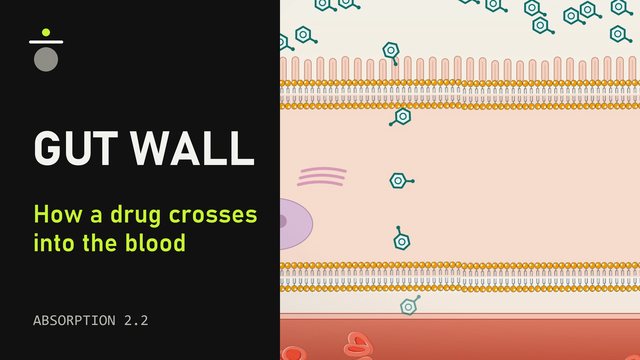
Crossing the gut wall
This lesson covers the three routes across the gut wall: passive diffusion through the cells, the paracellular route between them, and transporters such as PEPT1 and P-gp. It shows how Caco-2 cells predict absorption in humans, and how rifampin changes talinolol exposure through P-gp in the gut wall.
 2.37:32
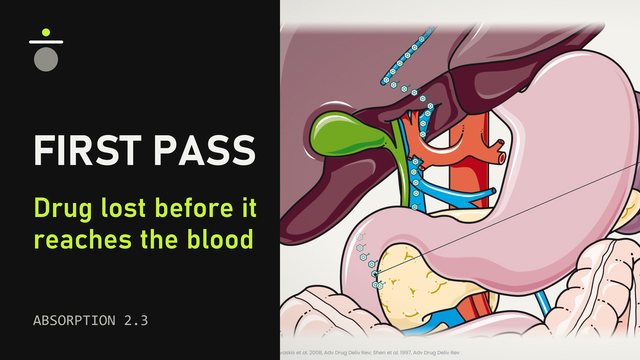
First-pass metabolism
This lesson covers first-pass metabolism in the gut wall and the liver, the fractions Fg and Fh, and the routes that avoid the first pass. Two studies of midazolam show how much drug each organ removes.
 2.47:50
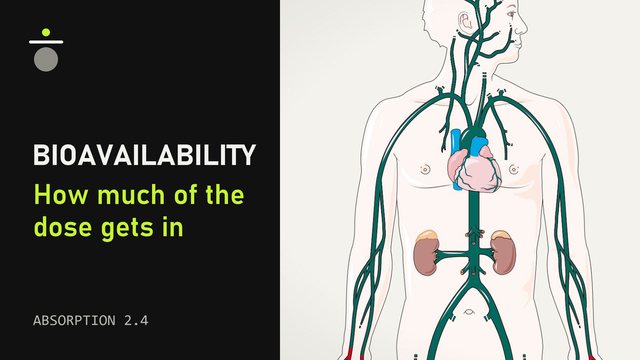
Bioavailability
This lesson covers bioavailability, F = Fa x Fg x Fh, and the three types of study that measure it: absolute bioavailability, relative bioavailability and bioequivalence. Apixaban gives an example of each.
 2.57:31
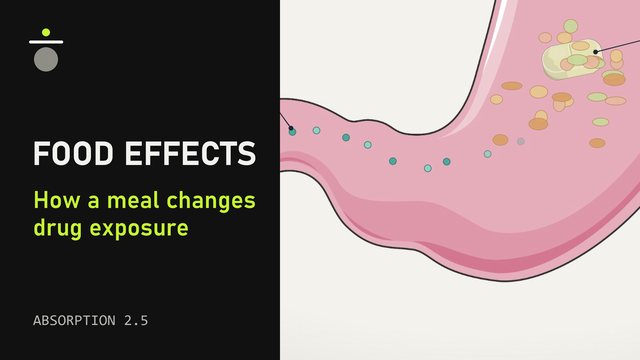
Food effects
This lesson covers food effects: how a meal changes gastric emptying, bile salts, gut pH, liver blood flow and transport through the lymph, and which drugs show positive or negative food effects. Lapatinib shows a large positive food effect.
 2.67:33
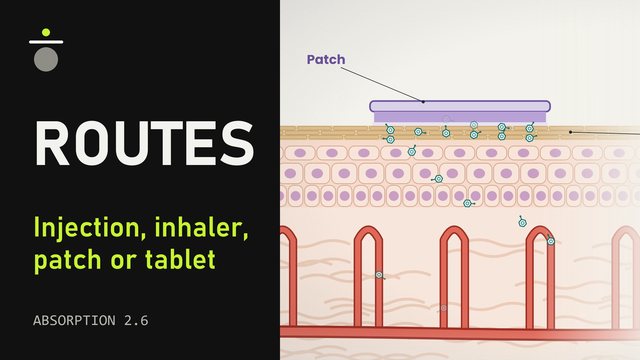
Routes and formulations
This lesson covers injection, inhalation, the skin, the lining of the mouth, extended-release tablets and absorption through the intestinal lymph. Fentanyl, given by several routes, is the worked example.